
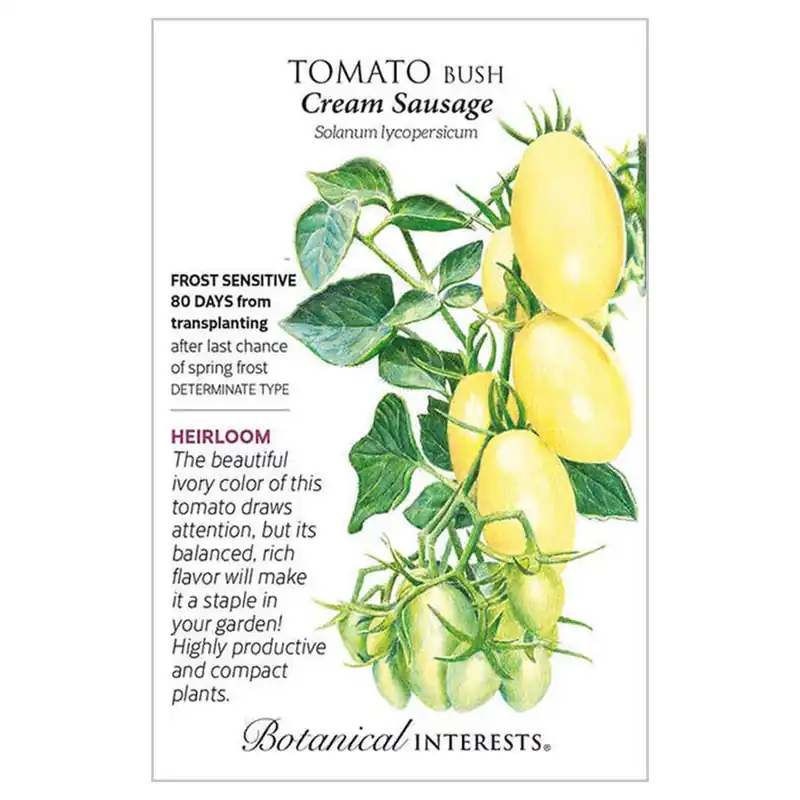
Description
True to name, these cylindrical, cream to pale yellow tomatoes are best harvested at 3″-when they start to look like little sausages! With a smooth, buttery, rich flavor, ‘Cream Sausage’ is ready to eat like an apple right off the vine or save it for the kitchen to simmer into a yellow pasta sauce, create contrast in salsas or slice up for a fresh salad. This highly productive cultivar is compact and perfect for containers. A Botanical Interests staff favorite!
Variety
Creamy white to light yellow, oblong, 3″ long fruits. ‘Cream Sausage’ is a determinate type tomato.
Days to Maturity: 80 Days From Transplanting
Family: Solanaceae, Nightshade family, includes tomatoes, potatoes, petunias, nicotiana, Chinese lantern and eggplant
Native: Andes
Hardiness: Frost-sensitive Annual
Exposure: Full Sun
Plant Dimensions: 36″ Tall
Attributes: Frost Sensitive, Good for Containers
Sowing
When to Sow Outside
For mild climates only: 1 to 2 weeks after your average last frost date and when soil temperature is at least 60° F.
When to Start Inside
Recommended 4 to 6 weeks before transplanting. Transplant when air temperature is 45° F or warmer, usually 1 to 2 weeks after your average last frost date. Ideal soil temperature for germination is 70°-90° F.
Days to Emerge: 5-10 Days
Seed Depth: 1/4″
Seed Spacing: A Group of 3 Seeds Every 24″
Row Spacing: 36″
Thinning: When 2″ Tall, Thin to 1 Every 24″
Growing
Harvesting
“Cream Sausage’ tomatoes are at the peak of sun-ripened deliciousness when creamy white to light yellow and have a slight give when gently squeezed. Include for all but green tomatoes: Tomatoes may also be picked at the first blush stage, when 50% of the tomatoes’ color has begun to change and ripened at room temperature without decreasing flavor or nutrition. Picking often and early increases yield and decreases the risk of cracking and pest damage. Ripe fruit left on the vine during rain or watering is more susceptible to splitting. About 1M before the average first fall frost, clip all blossoms and undersized fruit off the plant, signaling to the plant to ripen what’s left. Pick any unripe fruit before frost and store them indoors in a single layer away from direct sunlight to ripen.”
Special Care
Do not mulch when weather is still cool; the roots of young plants need to be in soil that is warmed by the sun. When the weather warms up and plants are established, mulch to a depth of 2″ or 3″ with a material such as straw, leaves or compost, to conserve moisture, reduce weed growth and keep the roots warm.
Specifications
Type: Conventional



Reviews
There are no reviews yet.