
Description
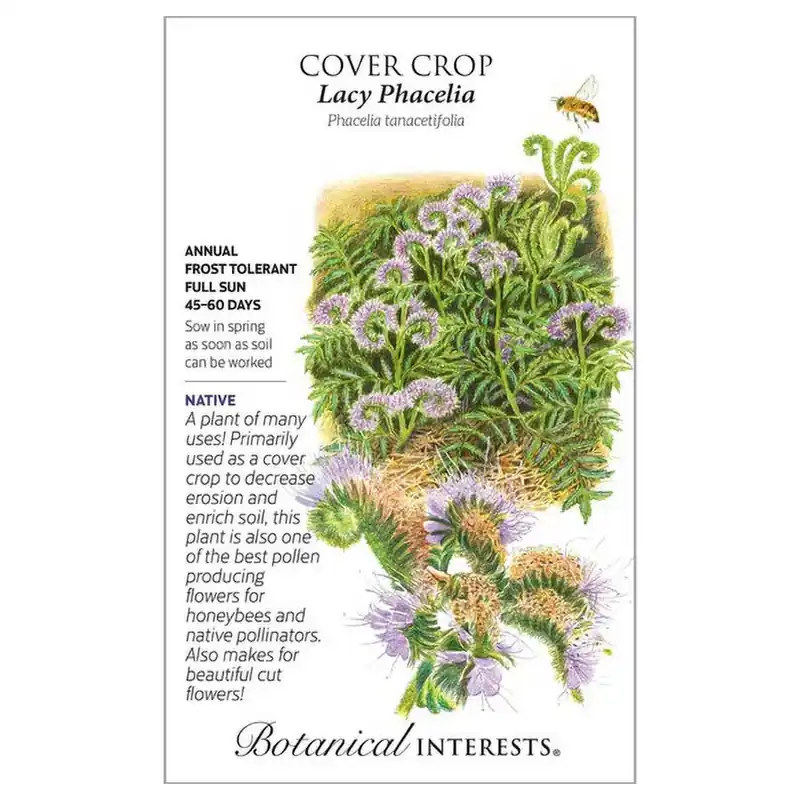
Known by many names including “Lacy Scorpion-weed”, “Blue Tansy” and “Bee’s Friend”, this plant does it all! While primarily used as a cover crop to improve soils and decrease erosion, “Lacy Phacelia” has adorable, bell-shaped, violet flowers found on fiddlehead clusters. These clusters make for fantastic cut flowers. As “Lacy Phacelia” is native to Arizona and California, it is very tolerant of drought conditions and poor soils, so it’s perfect for low-water use gardens! As an added bonus, this plant attracts many pollinators including native bumblebees, bee flies and honeybees. This plant can grow well from sea level up to 8,000′.
Variety
Erect and semi-erect stems covered with short stiff hairs. Small, violet, bell-shaped flowers occur in fiddlehead clusters that unfold as the plant continues to bloom. Plants can cause minor skin irritation in sensitive individuals.
Family: Hydrophyllaceae
Native: Arizona, California and Northern Mexico
Hardiness: Frost-tolerant annual. Hardy to 19° F. Winter kills at 18° F; if using as winter cover, leave organic matter in place to prevent soil erosion
Exposure: Full Sun
Plant Dimensions: 12″-36″ Tall
Attributes: Frost Tolerant
Sowing
When to Sow Outside
In spring, sow as soon as the ground can be worked. Germination takes place when soil temperatures are between between 40° F and 68° F. Extreme high and low temperatures inhibit germination. Darkness is required for germination, so fully cover seeds with soil. In fall, start 8 weeks before your expected first frost to reach plant maturity.
When to Start Inside
Days to Emerge: 15-30 Days
Seed Depth: 1/4″
Seed Spacing: Scatter seed about 2″ apart
Growing
Harvesting
Before they set seed, cover crops should be incorporated into the soil or removed. Dig up the plants and turn under or use a tiller. If you want to speed the decomposition process, mow the crop first to cut the plants into smaller pieces. Cover crops decompose in the soil rather quickly; in just 2 to 4 weeks after incorporation, you can sow your next crop. If you choose not to incorporate the cover crop into your soil right away, add the cuttings to your compost pile. As they break down, they give the compost the same enriching benefits to be added to your garden soil later. You can use cover crops as mulch, too. As mulch, the plants break down more slowly, but still add the benefits of soil-moisture retention, wind erosion reduction and insulation, which keeps the soil warm or cool. To use as mulch, cut plants down to the soil by hand, mower or weed whacker.
Specifications
Type: Conventional


Reviews
There are no reviews yet.