
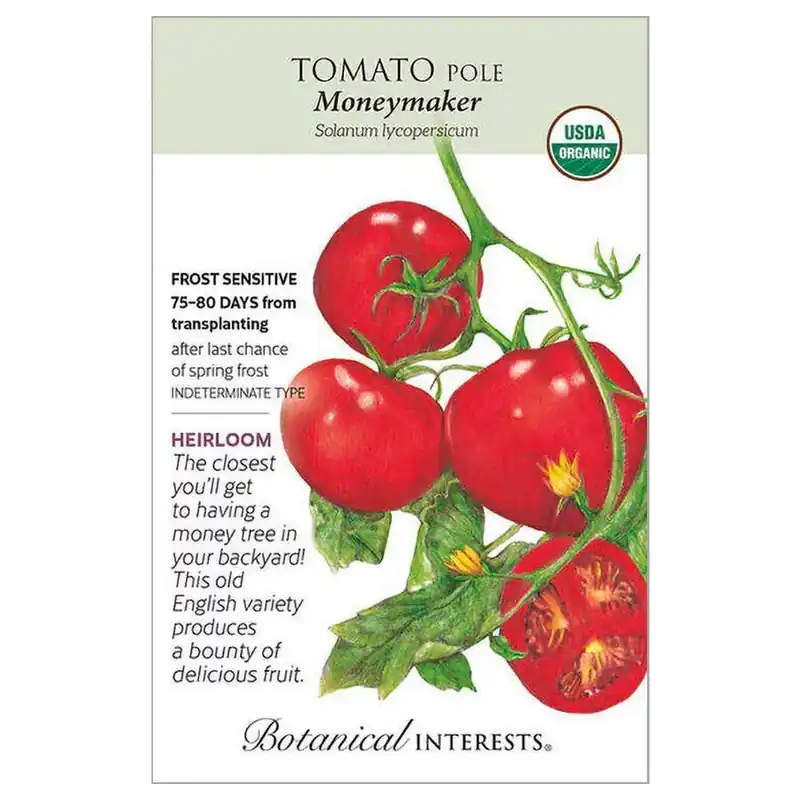
Description
A very popular variety for commercial growers in the 1950s and 1960s, ‘Moneymaker’ earned it’s name because of it’s uniformity and reliably heavy yields. The medium-sized fruits are sweet with a meaty texture, making them versatile for use in fresh or cooked dishes. A good choice for greenhouses as well as outdoors. A favorite of southern gardeners and those in climates with hot, humid summers.
Variety
3-1/2 – 4 oz, 2-1/2″ globe-shaped fruits. ‘Moneymaker’ is an indeterminate type tomato.
Days to Maturity: 75-80 Days from Transplanting
Family: Solanaceae
Native: Andes
Hardiness: Frost-sensitive Annual
Exposure: Full Sun
Plant Dimensions: Vines up to 6′ or longer
Attributes: Heat Tolerant, Humidity Tolerant, Frost Sensitive
Sowing
When to Sow Outside
For mild climates only: 1 to 2 weeks after your average last frost date and when soil temperature is at least 60° F.
When to Start Inside
Recommended 4 to 6 weeks before transplanting. Transplant when air temperature is 45° F or warmer, usually 1 to 2 weeks after your average last frost date. Ideal soil temperature for germination is 70°-90° F.
Days to Emerge: 5-10 Days
Seed Depth: 1/8″
Seed Spacing: A Group of 3 Seeds Every 24″-36″
Thinning: When 2″ Tall, Thin to 1 Every 24″-36″
Row Spacing: 36″
Growing
Harvesting
“Moneymaker’ tomatoes are at the peak of sun-ripened deliciousness when they are fully red and have a slight give when gently squeezed. Tomatoes may also be picked at the first blush stage, when 50% of the tomatoes’ color has begun to change and ripened at room temperature without decreasing flavor or nutrition. Picking often and early increases yield and decreases the risk of cracking and pest damage. Ripe fruit left on the vine during rain or watering is more susceptible to splitting. About 1M before the average first fall frost, clip all blossoms and undersized fruit off the plant, signaling to the plant to ripen what’s left. Pick any unripe fruit before frost and store them indoors in a single layer away from direct sunlight to ripen.”
Special Care
Do not mulch when weather is still cool; the roots of young plants need to be in soil that is warmed by the sun. When the weather warms up and plants are established, mulch to a depth of 2″ or 3″ with a material such as straw, leaves or compost, to conserve moisture, reduce weed growth and keep the roots warm.
Specifications
Type: Organic



Reviews
There are no reviews yet.