
Description
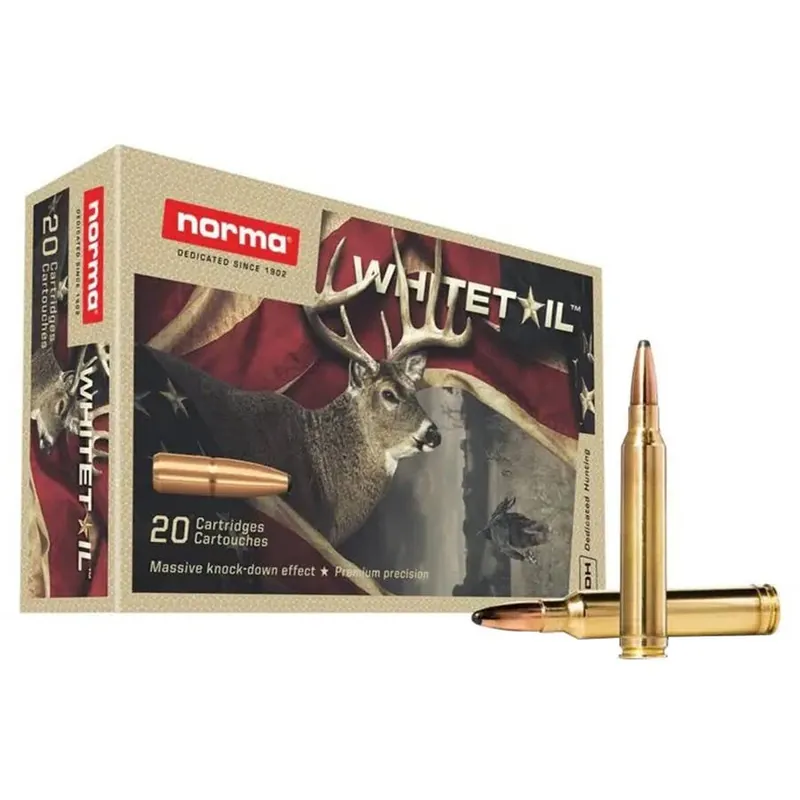
Introduced as late as 1963 this cartridge was soon to become the most popular in the line of .300 magnum. Unlike the predecessors .458, .264 and .338 Winchester Magnums it has a longer case and a rather short neck (.264″) in order to increase the case capacity. As a rule of thumb the neck of a cartridge should be equal to the caliber or preferably a little longer, but experience has shown that the .300 Win Mag has not really suffered in this respect. It can still be used in a standard-length bolt action but this means that the heavier bullets must be seated rather deep and hereby occupy some of the powder space. Like the other .300 magnum it is at it’s best for hunting larger species like moose or elk at long range. The recoil is heavy, but most shooters will be able to handle it after some practice and handloads with lighter bullets are a good choice for this purpose.
Specifications
Application: Hunting
Caliber: 300 Win Mag
Bullet Weight: 150GR
Ballistic Coefficient (G1): 0.274
MrdImp: 210
Quantity: 20rd per Box
Test Barrel
| Velocity (FPS) | Energy (ft/lb) | Wind (Inches) | ||||||||
|---|---|---|---|---|---|---|---|---|---|---|
| V0 | V100 | V200 | V300 | E0 | E100 | E200 | E300 | 100 yd | 200 yd | 300 yd |
| 3248 | 2881 | 2543 | 2229 | 3513 | 2764 | 2154 | 1655 | 1″ | 4.3″ | 10.2″ |
Zero Range, Yards
Height of trajectory above line of sight if sighted in a X yards. For sights 40mm above bore.
| Zero Range | 50 yd | 100 yd | 150 yd | 200 yd | 300 yd |
| 50 | 0.7 | 0.3 | -1.2 | -8.6 | |
| 100 | -0.3 | -0.7 | -2.6 | -10.6 | |
| 150 | -0.1 | 0.5 | -1.2 | -9.2 | |
| 200 | 0.3 | 1.3 | 1.2 | -6.7 |
Reviews
There are no reviews yet.